
Introducing Distr v4
Distr v4 drops the "Hub" name for the server, encrypts the sensitive columns of its database at rest and replaces the access token format with one that is not stored in plaintext.
Read moreDistr v4 drops the "Hub" name for the server, encrypts the sensitive columns of its database at rest and replaces the access token format with one that is not stored in plaintext.
Read more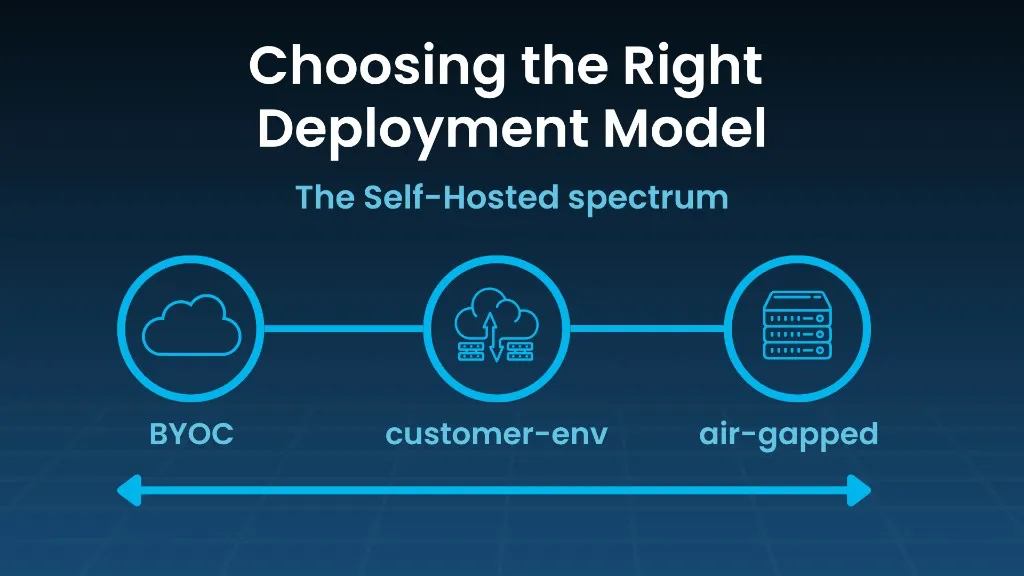
Self-hosted is the opposite of multi-tenant SaaS. Inside that, there is still a spectrum: BYOC on one end, air-gapped on the other.
Read more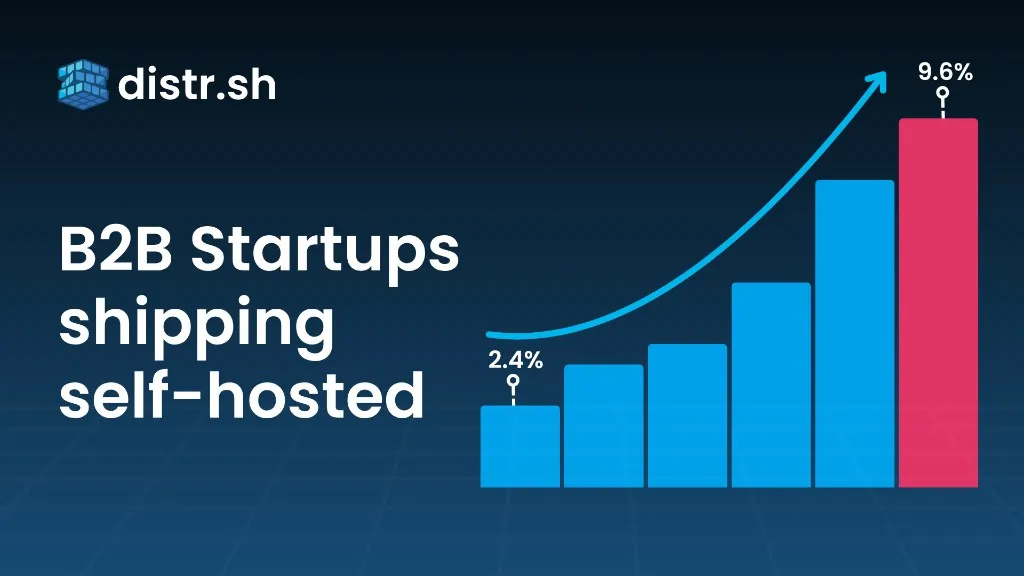
Research on YC-backed companies public offers for on-prem, self-hosted, BYOC and related deployment models. August 2026.
Read more
After 26 minor feature releases in the 2.x series, Distr v3 replaces the log storage backend with Grafana Loki for longer log retention.
Read more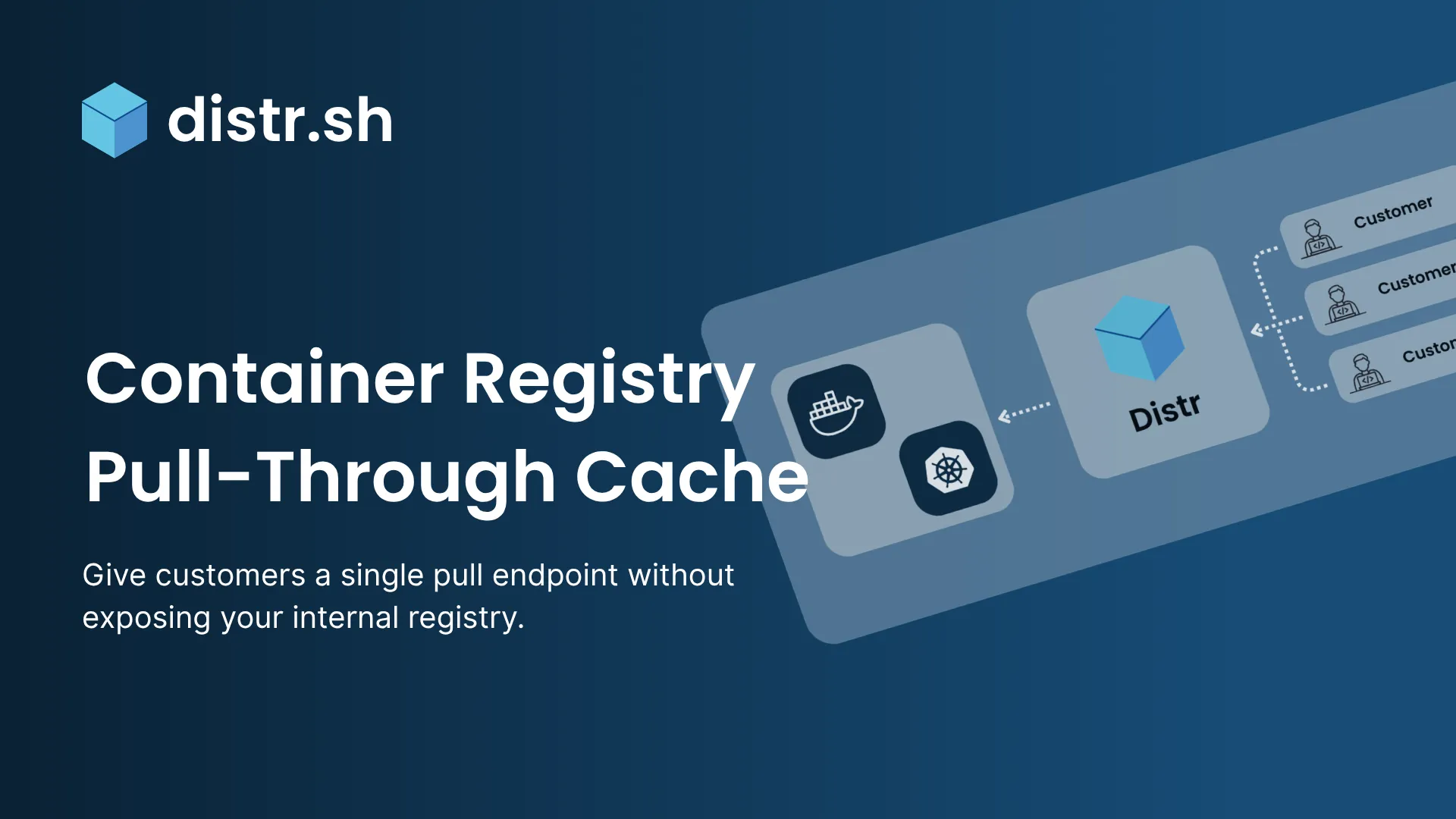
Use a pull-through cache as a customer-facing distribution layer so customers get one clean endpoint while your internal registry stays private.
Read more
Yes, plain Docker Compose can still run production workloads in 2026, but only if you close the operational gaps it leaves: cleanup, healing, image pinning, socket security, and updates.
Read more
A practical guide to shipping configuration files like postgresql.conf inside a Docker Compose deployment. Covers bind mounts, custom images, the Compose configs top-level keyword with inline content, and Compose secrets for sensitive values.
Read more
Shipping software on-prem means your customers have access to your container images. Here is what they can actually see, what they cannot, and the practical steps to protect your source code, model weights, and intellectual property.
Read more
When your software runs in a customer environment, debugging means asking them to paste logs in Slack. Support Bundles replace that with a single command that collects exactly what you need.
Read more
Kubernetes ships three minor versions a year. Your customers run whatever their platform team approved two years ago. How ISVs stop finding out about the gap from a support ticket.
Read more
SaaS licensing is a solved problem. Enforcing usage limits, seat counts, and feature flags for self-hosted customers is not. Here's how Distr handles it, including fully offline and air-gapped environments.
Read more
Distr now collects container logs and system metrics from every connected customer deployment and surfaces them in your vendor portal without SSH, screen sharing, or waiting.
Read more
How to automatically scan your application for CVEs in CI/CD and attach the report to every release your customers see in Distr.
Read more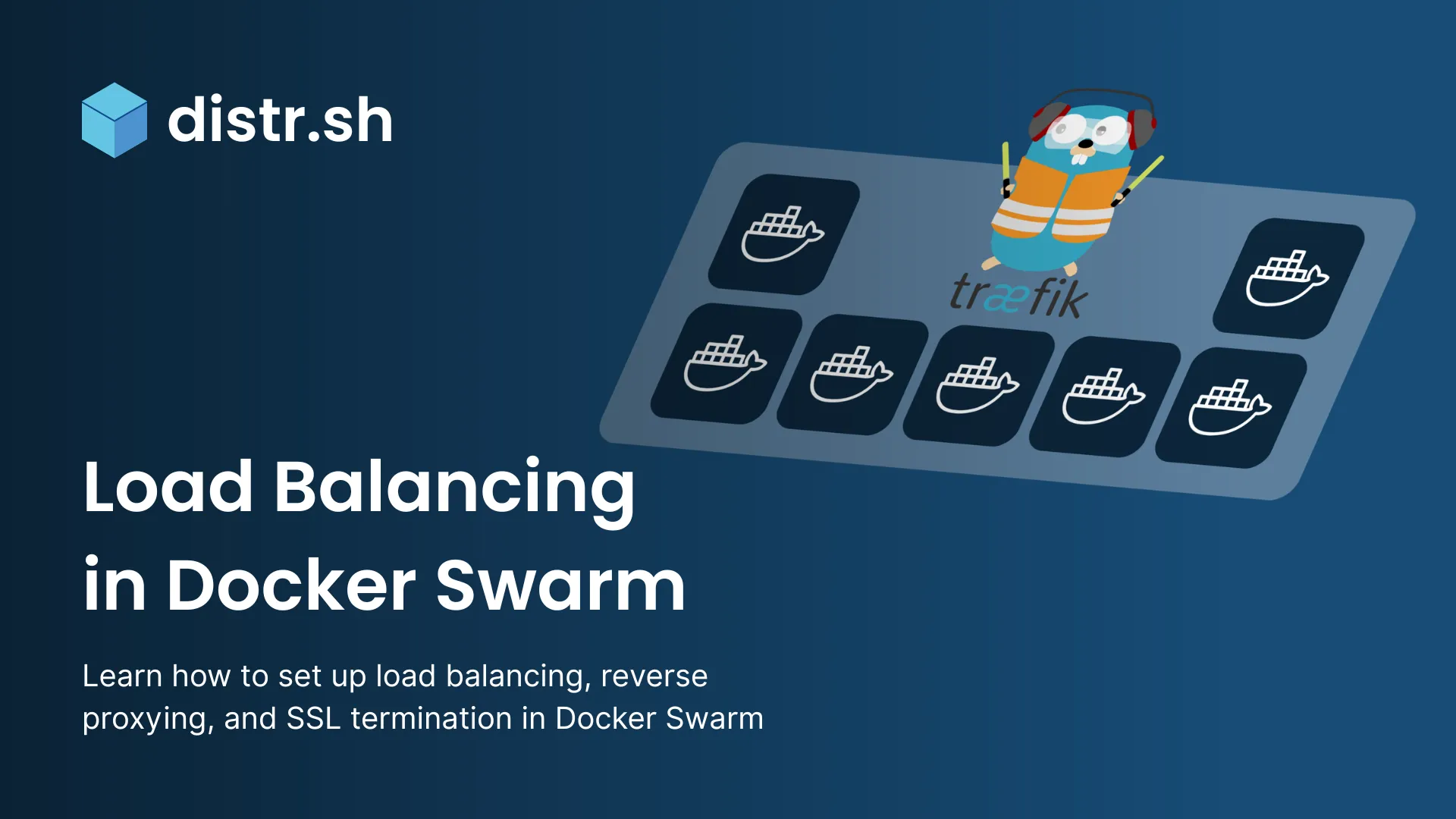
Learn how to set up load balancing, reverse proxying, and SSL termination in Docker Swarm. Covers two approaches: built-in routing mesh and Traefik with automatic HTTPS, plus monitoring with Prometheus and Grafana.
Read more
Distr alerts close the visibility gap for self-hosted customer deployments. Get notified when updates fail, deployments go dark, or apps crash, before your customers tell you.
Read more
Learn three production-ready approaches to implement cron jobs in Docker Compose: lightweight schedulers, integrated solutions, and dedicated job launchers. Includes code examples, architecture diagrams, and trade-off analysis.
Read more
A practical guide to choosing between Docker Compose and Kubernetes for software distribution.
Read more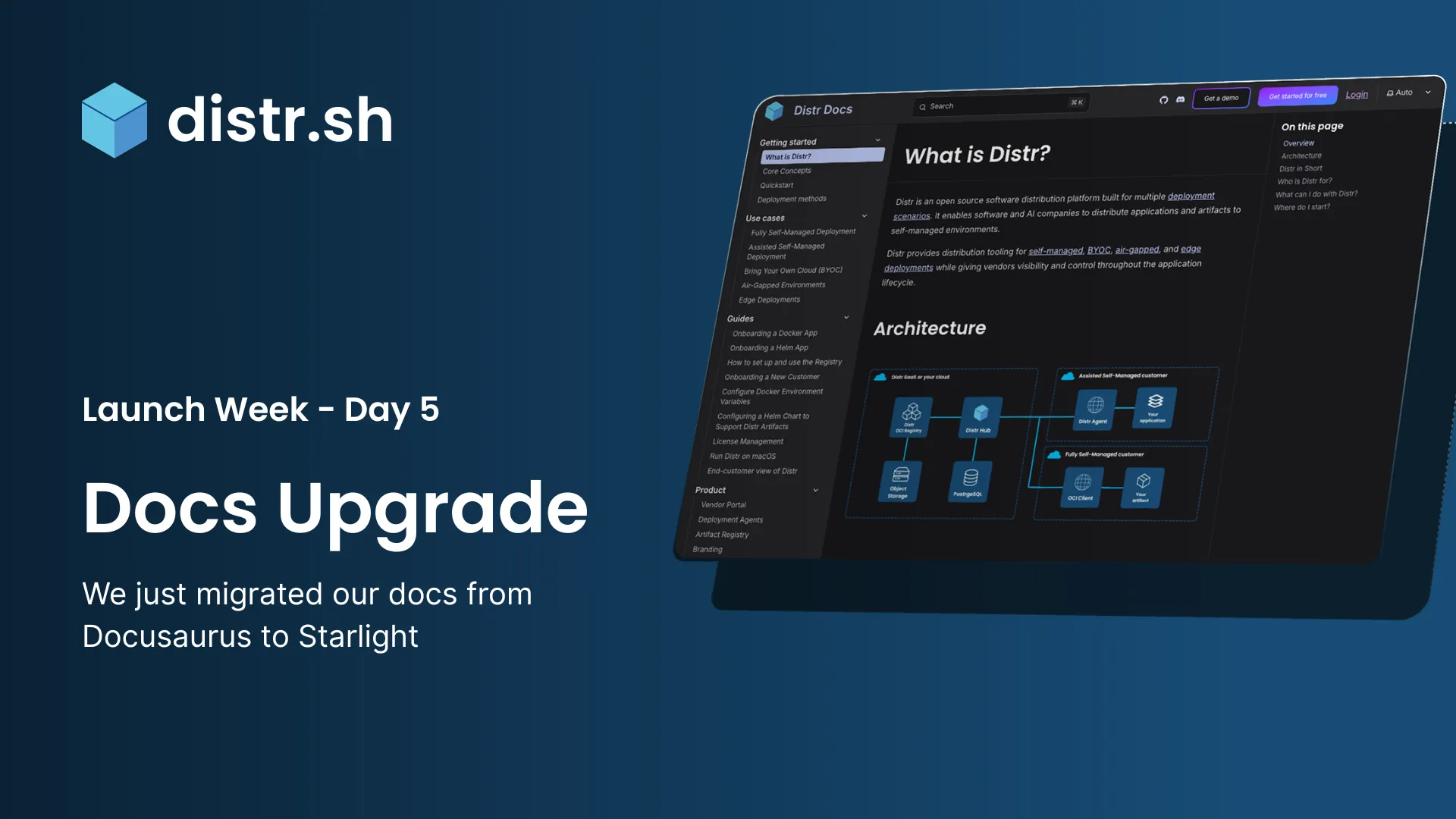
Comparing Docusaurus vs Distr incl. Design, SEO, DevEx, Extensibility and how we structured our technical documentation
Read more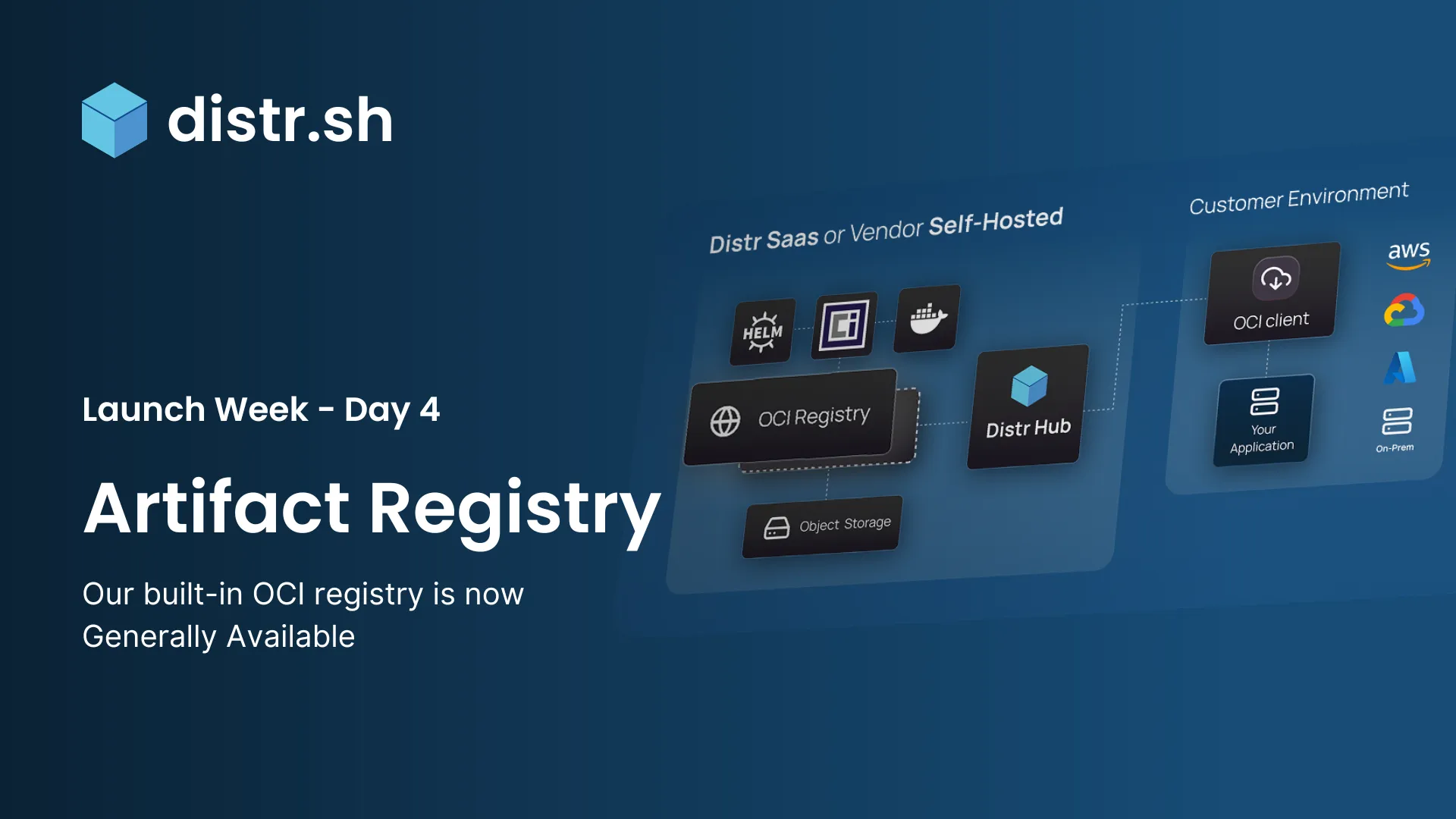
A built-in OCI registry with tag-based access control, audit logs, and support for Helm, Docker & more, designed to simplify self-hosted software distribution for both vendors and customers.
Read more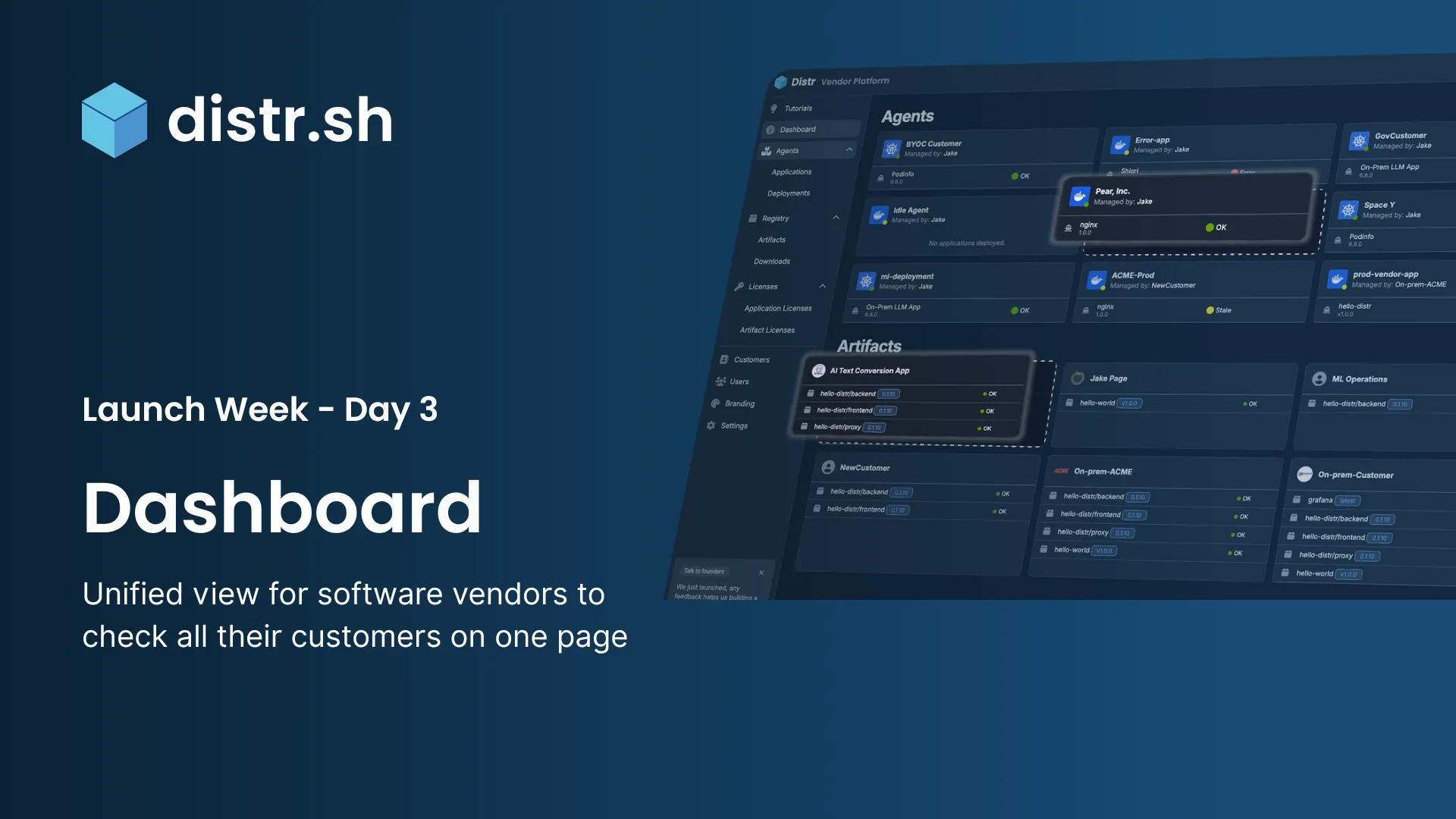
The new Distr Dashboard comes with support for multi application deployments per target, avatars, metrics.
Read more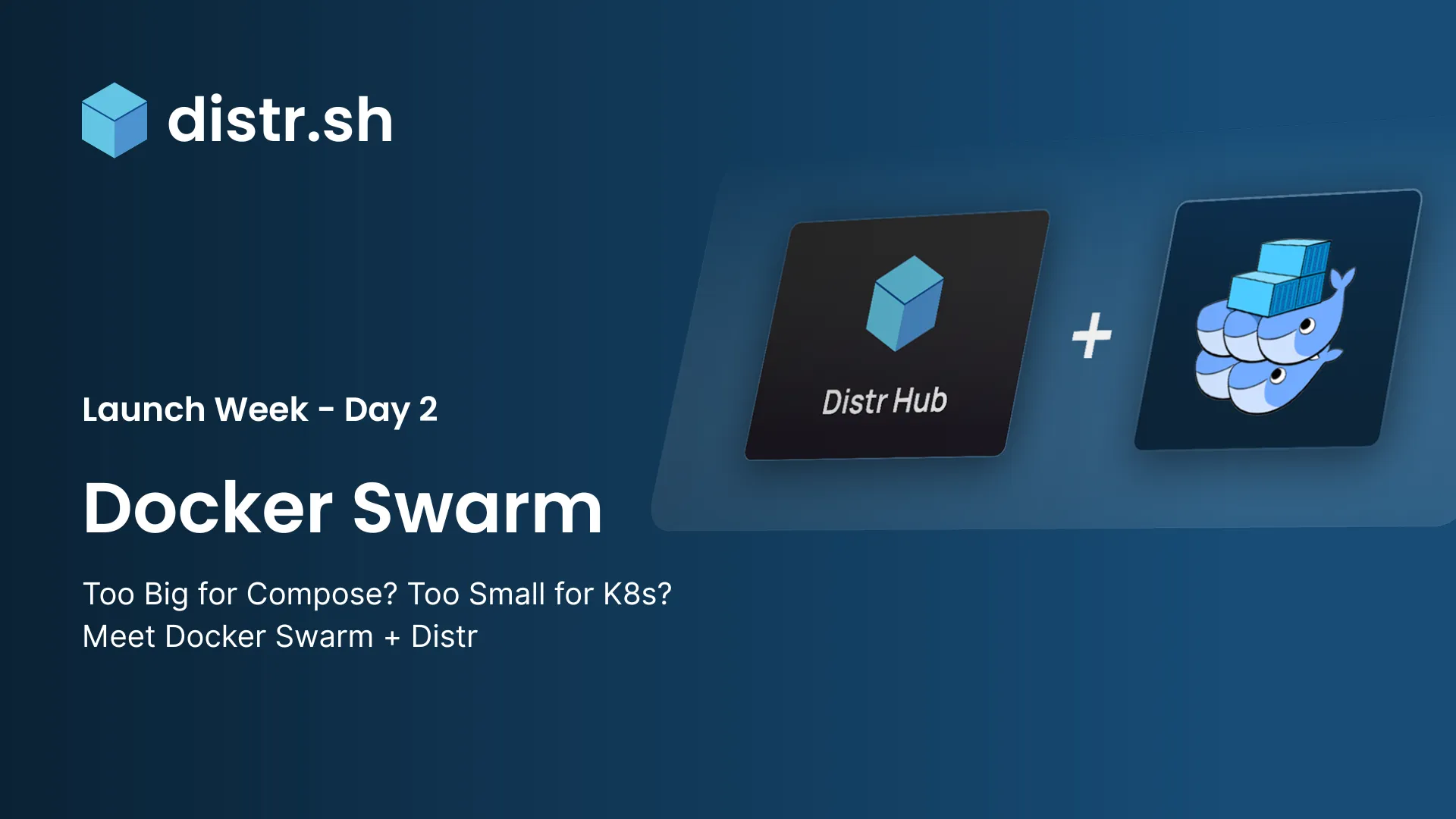
Distr now supports distributing applications via Docker Swarm
Read more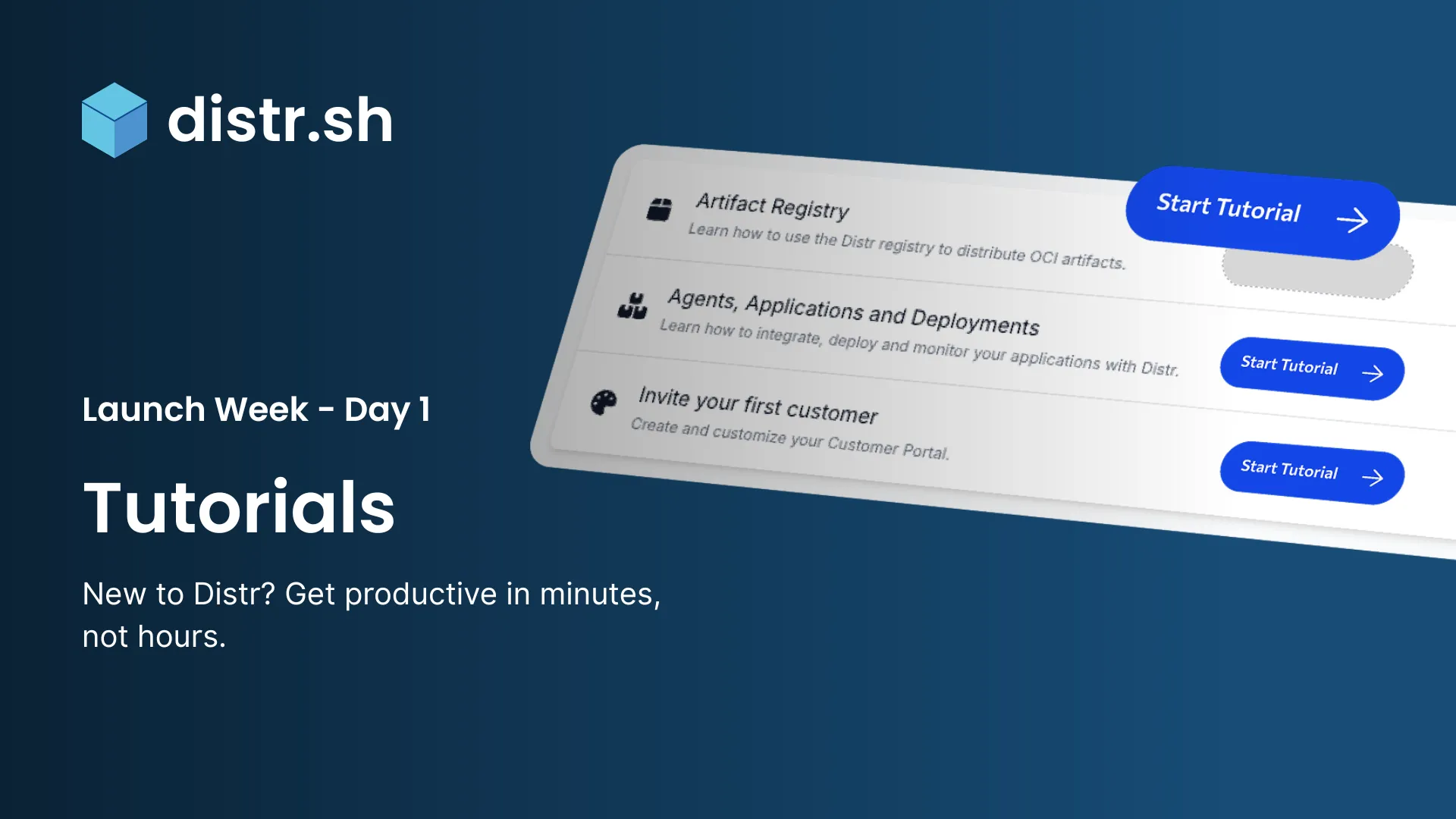
We are happy to introduce the new Distr Tutorials which improves your onboarding experience.
Read more
12 container registries compared: Docker Hub, ECR, Google AR, ACR, Harbor, JFrog, GitHub, GitLab + 4 more. Pricing, self-hosting, open source, and scale.
Read more
All the details about Distr v1.4
Read more
All the details about Distr v2.0
Read more
All the details about the inaugural release of Distr v1.0
Read more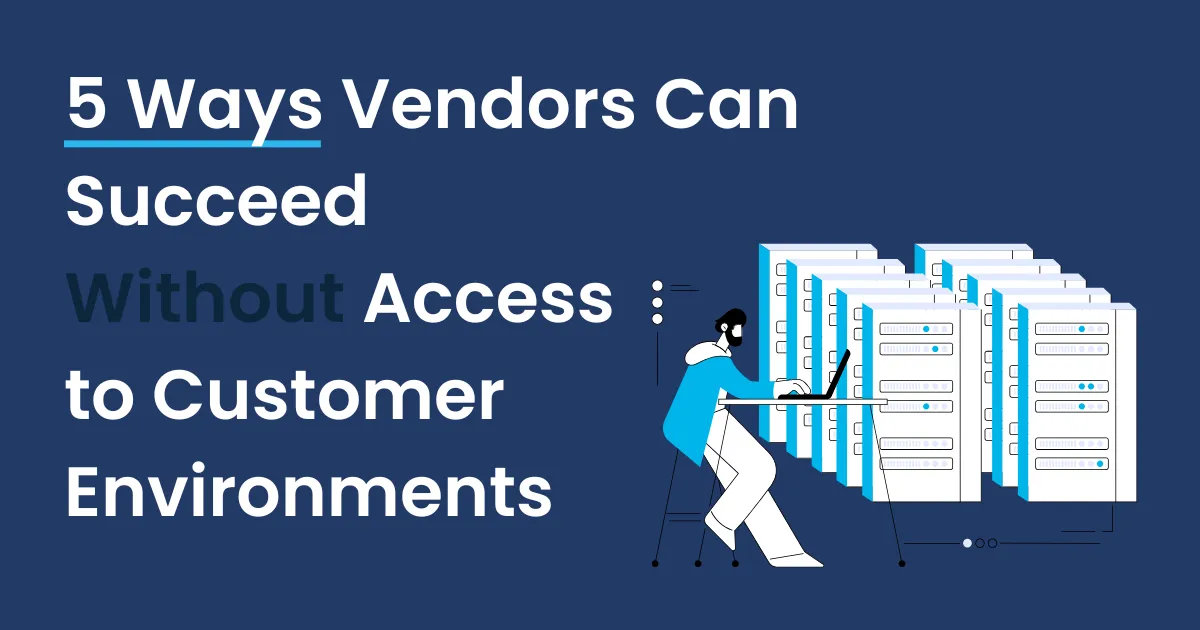
Software vendors don't have it easy, especially when trying to serve their self-hosted customers, here are 5 tips that are sure to help.
Read more